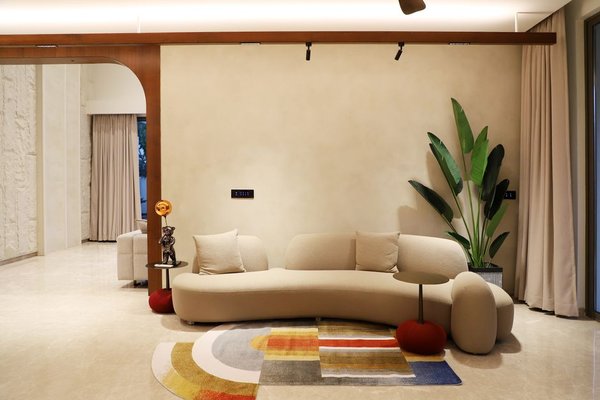
Curved sofas have moved from design-show curiosity to one of the most recognisable features of the 2026 living room. Their rounded backs, sweeping arms and cocooning shapes offer a softer alternative to the boxy seating that has dominated many British homes for years. More than a fashionable silhouette, the curved sofa living room trend reflects a wider shift towards interiors that feel relaxed, tactile and personal.
A curved sofa introduces movement, breaks up rigid architectural lines and gives the eye a natural place to rest. Styled well, it becomes a confident living room centrepiece that remains comfortable for everyday life.
Why Curved Sofas Feel Right for 2026
Interior design in 2026 is leaning towards warmth, softness and shapes inspired by nature. Rounded furniture fits naturally into this mood. Instead of sharp corners and strict symmetry, rooms are embracing flowing outlines, tactile upholstery and pieces that feel almost sculpted.
This sculptural furniture trend also responds to the desire for more welcoming homes. A curved sofa can angle people towards one another, making conversation feel natural. Its form can improve visual flow too, particularly in an open-plan space where furniture must define a seating area without becoming a hard barrier.
Choose a Curve That Suits the Room
Some sofas have a gently bowed front, while others form a dramatic crescent. Before buying, consider how much floor space the curve needs and how it will look from several viewpoints.
For smaller living rooms
A compact sofa with rounded arms or a subtle curved back can introduce the trend without dominating the room. Raised legs or a low profile will keep more floor visible. This approach works particularly well in a bay window, an awkward corner or a room where a rectangular sofa feels too rigid.
For larger or open-plan spaces
A deeper crescent sofa can act as an architectural feature. Position it away from the wall so its outline can be appreciated. The back can create a graceful boundary between the lounge and a dining area, kitchen or walkway. Leave enough clearance around it so the shape looks intentional rather than squeezed into place.
Build the Layout Around One Focal Point
The best curved sofa styling begins with restraint. Because the sofa already has a distinctive silhouette, it rarely needs to compete with several other statement pieces. Let it become the main focal point, then arrange the room to support it.
A rounded coffee table is an obvious partner, but avoid making every object circular. Too many repeated curves can make the scheme feel themed. Balance a soft-edged table with a slim floor lamp, a structured side table or a rectangular rug. The contrast helps the sofa stand out while keeping the room grounded.
Protect clear walking routes around the sofa. In a compact room, a small side table may be more useful than a large central table, while two lightweight tables can offer flexibility in a spacious layout.
Use Colour to Set the Mood
Curved sofas work in both quiet and bold palettes. Oatmeal, stone, warm grey and soft cream emphasise the form while creating a calm, contemporary look. These colours pair naturally with timber, linen curtains, textured walls and understated artwork.
For stronger statement sofa ideas, consider moss green, rust, tobacco, deep blue or muted burgundy. Rich colour makes the silhouette more dramatic, especially in velvet or a softly brushed fabric. A bold sofa can look sophisticated against warm off-white, clay-toned neutral or gently contrasting paint.
Practicality still matters. Homes with children, pets or frequent guests may benefit from durable woven upholstery, removable covers or a mid-tone shade that disguises everyday marks. The trend should serve the household, not create a living room nobody feels comfortable using.
Layer Texture Without Hiding the Shape
A curved sofa already has visual presence, so accessories should enhance rather than obscure it. Use a few cushions in varied sizes instead of covering the entire back. Bouclé, linen, velvet and subtle patterns can add depth, but leave enough upholstery visible for the outline to remain clear.
Drape a throw over one end rather than across the centre. This keeps the styling relaxed and introduces asymmetry. Underfoot, choose a rug large enough to connect the sofa with nearby chairs and tables. Organic or oval rugs complement the shape, while a rectangular rug provides useful contrast.
Complete the Room with Art and Lighting
One large artwork, a textile hanging or a balanced group of frames can anchor the wall behind the sofa. Follow the sofa’s visual width and avoid hanging art too high.
An arched floor lamp, globe pendant or rounded ceramic lamp reinforces the softness, while an angular lamp adds definition. Side chairs do not need to match the sofa; a compact vintage chair or clean-lined occasional seat can make the arrangement feel collected rather than purchased as a set.
Avoid Common Curved Sofa Mistakes
The first mistake is pushing a dramatic curved sofa flat against a wall. Some compact models suit wall placement, but deeper designs usually need breathing room. The second is ignoring scale. A tiny rug or delicate table can look lost beside a generous sofa, while oversized accessories can make the area feel congested.
Do not choose appearance at the expense of comfort. Check seat depth, back support and upholstery in person where possible. Finally, resist copying an inspiration image exactly. The most successful rooms adapt the curved sofa living room trend to their architecture, routines and existing belongings.
Frequently Asked Questions
Are curved sofas suitable for small living rooms?
Yes, when the proportions are right. Choose a compact model with a gentle curve, measure the full depth carefully and keep surrounding furniture light. A rounded two-seater can sometimes improve flow where a bulky rectangular sofa would create hard corners.
What coffee table works with a curved sofa?
Round, oval and organic-shaped tables naturally follow the sofa’s lines. A slim rectangular table can also work by adding contrast. The best choice leaves comfortable walking space and feels proportionate to the sofa’s height and width.
Will a curved sofa go out of style quickly?
Highly exaggerated models may feel more trend-led, but rounded furniture has appeared across several design periods. A well-made sofa in a versatile fabric and balanced shape can remain attractive beyond 2026, particularly when accessories are easy to update.
How can I make a curved sofa feel less formal?
Add relaxed textures, a casually placed throw, mixed cushions and practical side tables. Personal artwork, books, plants and vintage pieces will help the sofa feel integrated into the home rather than displayed as a showpiece.
Make the Trend Your Own
The curved sofa living room trend succeeds because it combines comfort with visual impact. It can soften awkward angles, encourage a more sociable layout and turn seating into a genuine design feature. The key is not to fill the room with curves, but to let one strong shape lead the scheme.
Choose a sofa that fits the space, support it with balanced furniture and use colour and texture in a way that reflects how you live. Done thoughtfully, a curved sofa becomes more than a 2026 trend. It becomes a practical, sculptural and inviting centrepiece that gives the living room unmistakable character.