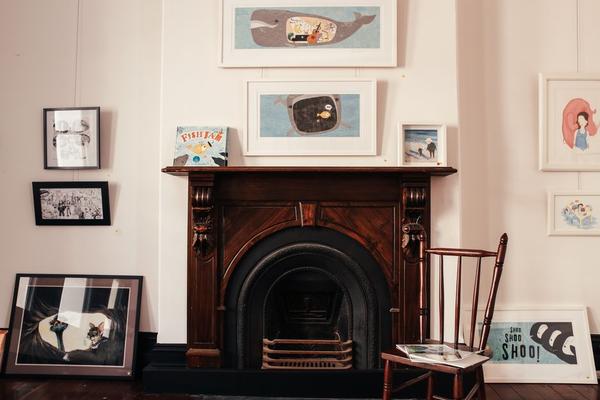
A fireplace naturally pulls the eye, even when it is not lit. In many UK living rooms, the mantelpiece sits at the centre of the main wall, so the way it is styled can influence the whole room. The most useful mantelpiece decor ideas are not about constantly buying new accessories. A better approach is to create one balanced base arrangement, then make small seasonal changes around it. That keeps the fireplace looking considered in January, July and December without turning decorating into a monthly project.
Start with one strong focal piece
Most successful fireplace styling begins with a single visual anchor above the mantel. A mirror is a classic choice because it reflects light and can make a smaller living room feel more open. Artwork works equally well when you want more colour or personality. Choose a piece that feels substantial in relation to the fireplace rather than one that seems to float in the middle of the chimney breast.
If the mantel is around 120 cm wide, for example, a mirror or artwork roughly 70 to 90 cm wide will often feel more convincing than a very small frame. The exact size depends on the surround, wall width and ceiling height, but the aim is visual connection. The object above should look as though it belongs to the fireplace.
Build a flexible base layout
Once the central piece is in place, treat mantel decor as a composition rather than a shelf to fill. A reliable layout uses height at one side, a lower grouping at the other and some empty space between them. Slight asymmetry usually looks more relaxed than arranging matching objects in perfect pairs.
Create height without overcrowding
A tall candlestick, narrow vase or sculptural object can establish the high point. Keep it below the top of the mirror or artwork so the pieces do not visually collide. If you use several candles, vary their heights rather than lining them up evenly. Two or three related pieces normally look more intentional than many small accessories scattered across the mantel.
Leave some breathing room
Empty space is part of the design. A crowded mantel can make even an elegant fireplace feel busy, especially in a compact room. Allow part of the surface to remain visible. This also makes seasonal swaps easier because you can add one or two temporary elements without rebuilding the whole display.
Use texture to give neutral rooms depth
Neutral schemes benefit from a mix of finishes. Try pairing a smooth ceramic vase with aged brass candlesticks, a timber frame or a small stone object. The colours can remain restrained while the materials create interest. This is especially effective in traditional homes where the fireplace already includes strong textures such as brick, slate, marble or painted timber.
In a contemporary room, keep the material palette tighter. Matte black, clear glass and one warm natural finish may be enough. The goal is not to match every accessory exactly, but to repeat a few tones so the fireplace styling connects with the rest of the room.
Make seasonal changes without starting again
A good base arrangement should work for most of the year. Keep the mirror or artwork, the main candle grouping and one permanent decorative object in place. Then change only the lightest layer of the display.
In spring, introduce blossom or fresh greenery in a simple vase. For summer, pale ceramics or leafy stems can make the mantel feel lighter without becoming themed. Autumn suits warmer foliage, deeper candle tones and textured branches. At Christmas, add restrained greenery or a short garland while keeping enough of the original arrangement visible for the fireplace to remain part of the room rather than becoming a separate festive display.
This method also reduces storage. Instead of owning four completely different sets of accessories, you only need a few seasonal pieces that work with the same permanent foundation.
Match the mantel to the whole room
The best chimney breast ideas take cues from the wider living room. If the coffee table and shelving already hold plenty of decorative objects, keep the fireplace simpler. If the room is minimal, the mantel can carry more visual weight. Repeating a material or colour from elsewhere creates continuity: a brass lamp can be echoed by a candlestick, or green cushions by foliage on the mantel.
Check the arrangement from the doorway as well as from directly in front. In many UK homes, the fireplace is one of the first things seen on entering the room. A display that appears balanced close up can look oddly weighted from the room’s main approach.
Common styling mistakes to avoid
One common mistake is choosing accessories that are all the same height, creating a flat horizontal line. Another is using objects that are too small for the scale of the fireplace. Several tiny frames may be meaningful, but grouping them elsewhere and giving the mantel fewer, larger pieces often produces a stronger result.
Safety matters around an active fire or stove. Heat can damage candles, dried foliage, paper decorations and frames, while combustible materials may create a fire risk. Follow the appliance manufacturer’s clearance instructions and keep decorative pieces away from flames, hot surfaces and vents.
Useful related ideas
Natural internal linking opportunities for this topic include living room layout ideas, how to style shelves, and living room lighting ideas.
FAQ
How many items should you put on a mantelpiece?
There is no fixed number, but fewer, larger pieces usually look calmer than many small ones. A focal piece above the mantel plus two or three grouped accessories is a useful starting point. Adjust the amount to suit the width of the fireplace and how visually busy the rest of the room feels.
Should mantel decor be symmetrical?
Not necessarily. Symmetry can suit formal or traditional rooms, while asymmetry often feels more relaxed and contemporary. Balance matters more than perfect matching, so a tall object on one side can be offset by a lower, wider grouping on the other.
Can you style a mantelpiece without a mirror?
Yes. Artwork, a framed textile, a wall-mounted sculptural piece or even a deliberately bare chimney breast can work. Choose something with enough scale to relate to the fireplace and avoid hanging a very small object too high above the mantel.
How do you decorate a mantel all year round?
Keep a permanent base of one focal piece and a few versatile accessories, then rotate small seasonal details such as foliage, flowers, candles or lightweight decorations. The room stays familiar while still feeling refreshed through the year.
Keep the base simple and let the seasons do the rest
A well-styled mantelpiece does not need constant reinvention. Start with the right-sized mirror or artwork, add a small number of pieces with varied height and texture, and leave enough empty space for the arrangement to breathe. Once that foundation is right, seasonal changes become quick and inexpensive. The result is a fireplace that remains a confident focal point all year rather than a surface that only looks finished at Christmas.