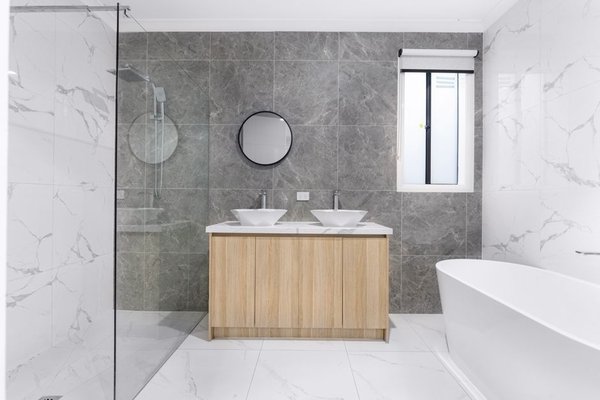
The most expensive bathroom renovation mistakes rarely begin with tile choice. They start earlier: a door that cannot open around a vanity, a poorly waterproofed shower, or a budget that ignores what might be hiding behind old walls. A successful renovation is not just about attractive fixtures. It is about making decisions in the right order and checking how the room will work on an ordinary morning.
Designing the Layout Without Testing Real Movement
A floor plan can look convincing even when the bathroom feels cramped. One common bathroom planning error is measuring where a fixture fits but not how someone approaches, opens, or cleans around it.
Mark the dimensions of the toilet, vanity, shower, and door on the plan. Include door swings, drawer extensions, towel rails, and standing space. Check local clearance and accessibility requirements rather than copying a photograph.
Try a Full-Size Layout Test
Before ordering a wide vanity, mark its footprint with painter’s tape. Open the door and imagine someone using the sink. Can a drawer extend without hitting the toilet? Can someone step out of the shower onto a clear, slip-resistant surface? This test often reveals bathroom remodel mistakes that a mood board cannot. A bathroom layout planning guide can help you compare arrangements before moving pipes.
Moving Plumbing Before Investigating Existing Conditions
Relocating a toilet or shower can improve a layout, but it may require changes to waste pipes, floor levels, or structural elements. A beautiful plan is not automatically buildable. In older homes, opening a wall can reveal damaged framing, corroded pipes, or outdated installations.
Have relevant trades inspect existing services before finalizing fixture positions. Ask what must be opened, whether permits or inspections apply, and which tasks depend on other specialists. Keep an alternative layout ready if relocating plumbing becomes too expensive.
Treating Tile and Grout as Waterproofing
This is among the bathroom fitting mistakes with consequences that may stay hidden for months. Tiles provide a durable finish, but grout joints are not waterproof. Showers need a suitable water-management system behind or beneath finishes, including at corners, penetrations, niches, and drain connections.
Specify a complete system compatible with the substrate and follow its manufacturer’s instructions. Mixing membranes, boards, and sealants without checking compatibility creates risks. Ask the installer how the shower floor slopes toward its drain and what inspection or testing is appropriate before tiling.
A fresh bead of silicone cannot correct a poorly constructed wet area. Sealant requires maintenance and does not replace proper waterproofing. Discuss shower waterproofing methods before the work is concealed, not after water stains appear downstairs.
Forgetting Where Shower Moisture Will Go
Bathrooms produce bursts of humidity. Without effective extraction, moisture lingers on ceilings, walls, and window frames, encouraging mold and finish damage. A noisy fan is not necessarily moving enough air, while one discharging into a roof space can simply relocate the problem.
Plan a correctly sized exhaust fan vented outdoors, subject to local requirements. Consider duct routing before closing the ceiling and provide a suitable path for replacement air. A timer or humidity control can help extraction continue after bathing. Leave access for cleaning and maintenance.
Buying Fixtures Without Checking Technical Details
A freestanding tub, wall-hung vanity, or concealed shower valve might look perfect online but bring surprises. Products vary in connection positions, fixing requirements, access needs, and dimensions. Even replacing a seemingly identical fitting can reveal a mismatch.
Download installation drawings before buying. Confirm that walls can support fixtures, servicing access remains possible, and the tap suits its basin without excessive splashing. Check actual dimensions. If an item has a long lead time, confirm delivery before scheduling installation.
Use qualified professionals for electrical work, lighting near water, and significant plumbing changes, following applicable codes. Solving technical problems after tiling is far more disruptive than resolving them on paper.
Sacrificing Storage and Lighting for a Minimal Look
Open shelves and a tiny floating sink may look spacious in photographs. But toothbrushes, towels, cleaning products, and toilet paper still need homes. Without practical storage, a polished room quickly becomes cluttered.
List what currently lives in the bathroom and decide where it will go. Choose drawers that open fully, moisture-suitable storage, and hooks reachable from the shower. Plan mirror task lighting alongside general illumination; overhead lighting alone often casts shadows. A bathroom storage ideas guide can offer solutions for compact rooms.
Budgeting for Visible Finishes Instead of Hidden Work
Many renovation problems arise when the budget covers fixtures but overlooks preparation. Include demolition, disposal, repairs, waterproofing, ventilation, labor, materials, and finishing. Set aside a contingency suited to the home’s age and condition, especially where concealed damage might appear.
Request itemized quotes and clarify exclusions. Establish who orders products, handles waste, arranges inspections, and corrects defects. A bathroom renovation cost breakdown can help compare quotes covering different work.
Sequence matters. Complete plumbing and electrical rough-ins before walls close, carry out necessary inspections and wet-area preparation before finishes, and protect finished surfaces during fitting. Changing a valve after tiling can turn a small decision into major rework.
Skipping the Final Pre-Start Checks
Before demolition, review the finished layout, product list, waterproofing approach, extraction route, and measurements with your contractor. Photograph existing conditions and record decisions in writing. Confirm which bathroom facilities will be available during construction.
Agree how unexpected damage will be documented and priced before extra work begins. This reduces hurried decisions while the room is unusable. Preventing bathroom renovation mistakes is often more about removing uncertainty than increasing the budget.
Frequently Asked Questions
What is the biggest mistake when renovating a bathroom?
Starting demolition without settling layout, waterproofing, and installation details is particularly risky. These choices affect multiple trades and are costly to change after floors and walls are finished.
Can waterproof grout replace shower waterproofing?
No. Grout does not replace a suitable waterproofing system. The substrate, membrane, drain connections, and installation method must work together to manage water.
Should I replace the bathroom fan during a remodel?
Not automatically. Check whether the existing fan extracts air effectively and vents outside. If it is inadequate, damaged, or incorrectly routed, remodeling offers a practical opportunity to fix it.
How can I prevent unexpected bathroom renovation costs?
Investigate existing conditions, obtain itemized quotes, order compatible fixtures early, and keep a contingency. Agree on written approval for changes before construction starts.
Build a Bathroom That Works Beyond the Reveal
A renovation should still succeed years after the final photograph. A bathroom that drains properly, resists moisture, feels comfortable, and stores everyday essentials beats one designed purely for appearances. Measure before ordering, settle technical details before finishes, and leave room for surprises. Those choices prevent costly bathroom renovation mistakes more reliably than a last-minute upgrade.