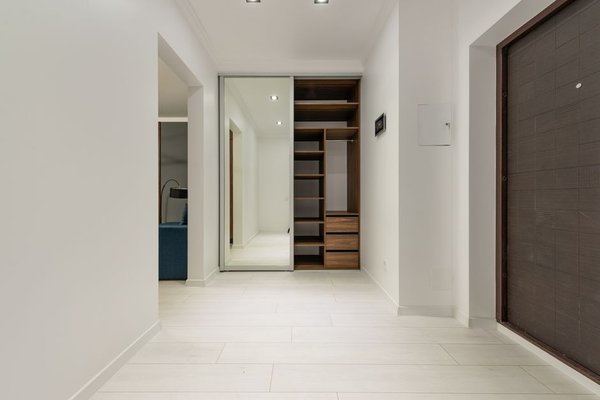
A hallway has to work harder than almost any other room. It welcomes visitors, catches wet shoes, holds school bags and becomes the last-minute search area for keys. In a busy UK home, the challenge is not simply fitting in more storage. It is keeping everyday essentials close to hand while leaving a comfortable, unobstructed route from the front door to the rest of the house.
Start with the route, not the furniture
Before ordering a shoe cabinet or coat rack, walk through the hallway at its busiest time. Notice where people stop to remove shoes, which doors swing into the space and where bags usually land. Measure the narrowest section, including skirting boards and radiators, then check how far any proposed furniture would project into the walkway.
Do not treat a hallway as spare storage simply because it has an empty wall. Fire-safety guidance recommends keeping doors, hallways and stairs clear for escape. That matters particularly in narrow terraces, flats and homes where the front hall is the main route out. Never let shelves, baskets or a bench obstruct an exit or prevent a door opening fully.
Choose shoe storage that matches daily habits
Keep the everyday pairs closest to the door
A family does not necessarily need a cabinet for every pair of shoes it owns. Instead, reserve the hallway for footwear worn this week. Store out-of-season boots, occasion shoes and spares in wardrobes or bedroom cupboards. This simple limit can make a surprisingly small shoe unit feel adequate.
For narrow spaces, compare shallow, wall-secured tilt-out cabinets with conventional racks. Check internal dimensions before buying: larger trainers and ankle boots may not fit neatly inside slim compartments. If you have room for a low bench, baskets underneath can give children accessible coat and shoe storage without creating another pile on the floor.
Make muddy footwear easy to manage
British weather adds a practical complication. A washable mat at the entrance catches grit, while a removable tray near the door contains wet soles until they dry. Avoid sealing damp shoes inside an unventilated cupboard. Rotate the tray’s contents regularly rather than letting it become permanent overflow storage.
Give coats and bags their own landing places
Wall hooks often work better than a crowded freestanding coat stand, especially where several people leave at once. Position hooks at heights suitable for those using them, with lower ones for children’s coats and school bags. Secure fittings appropriately for the wall type and the weight they will carry; heavy bags can pull weak fixings loose.
Think in terms of a daily allowance: one current coat and one regular bag per person. Move spare jackets, sports equipment and rarely used handbags elsewhere. If the hall has a recess, a narrow rail or fitted cupboard may keep hanging items from projecting into the walking line.
In a typical Victorian terrace, for example, a family might replace an overflowing coat stand with hooks on the wider wall, a shallow shoe cabinet by the entrance and one labelled bag spot per child. The result is not more storage capacity everywhere; it is less congestion exactly where people need to pass.
Create a small station for the things you forget
Keys, post, sunglasses, dog leads and reusable shopping bags often cause more hallway clutter than furniture does. Give these small items specific destinations instead of a general-purpose bowl that fills with receipts. A slim wall-mounted organiser can separate outgoing post from items needing attention, while a hook near the exit keeps keys consistently accessible.
For hallway organisation, the most useful question is: what must someone be able to grab in ten seconds? Keep those items visible and easy to reach. Everything else should earn its place. You can extend the same approach throughout the house with a practical guide to decluttering everyday spaces.
Use awkward corners without creating obstacles
Not every hallway can accommodate a bench or a standard console table. Recesses beside chimney breasts, space beneath stairs and short stretches of wall can be useful, provided they are genuinely outside the main route. Measure carefully before commissioning fitted cabinetry, and make sure access to meters, controls or essential services remains available.
Where an under-stairs cupboard already exists, divide it by frequency of use. Keep shopping bags and everyday accessories near the front; place seasonal items deeper inside. Simple under-stairs storage ideas work best when each shelf or container has one purpose, rather than becoming a hidden dumping ground.
Make the layout work for renters and families
If drilling is restricted, a slim freestanding unit may be more realistic than fitted joinery, but it must stand securely and not tip when drawers open. Ask your landlord before installing permanent fixings. Avoid relying on adhesive hooks for heavy winter coats or school bags unless their stated load limits and surface requirements are genuinely suitable.
For children, consistency beats elaborate systems. Give each person one accessible drop-off point, with labels if helpful, and keep a basket for things that belong upstairs. For households with mobility needs, prioritise clear manoeuvring space and storage that can be reached without awkward bending or stretching.
Build a five-minute reset into the evening
Even thoughtful storage fails when nobody maintains it. Each evening, put shoes back in their allocated places, move surplus coats to wardrobes, deal with post and return stray objects to their rooms. Once a week, empty the catch-all basket and clean the entrance mat.
If clutter returns immediately, reconsider the system before buying more organisers. Perhaps the shoe unit is too awkward to open, the hooks sit too high or there is no designated place for PE kits. The best small-space storage solutions remove friction from ordinary routines rather than demanding constant tidying.
Frequently asked questions
What is the best storage for a very narrow hallway?
Start with hooks and a genuinely shallow shoe unit, but measure the remaining passage with nearby doors open. If even slim furniture compromises movement, keep bulkier belongings in another room and use only a small, secure organiser for essentials.
How can I organise a hallway without buying new furniture?
Remove off-season coats and shoes, assign existing hooks to individuals and repurpose a washable container for wet footwear. A fixed place for keys and incoming post often improves the space immediately.
Should shoes be stored in an enclosed cabinet?
They can be, once clean and dry. Wet shoes need an opportunity to air before being shut away, and any cabinet should be checked for sufficient depth and ventilation.
Is it safe to store prams or bikes in the hallway?
Only where they do not obstruct doors or escape routes. Shared corridors and communal stairs should be kept clear, and larger items may need storage in a designated private area instead.
A calmer hallway begins with fewer decisions
Successful hallway storage is less about filling every gap and more about making the journey in and out feel effortless. Keep the route clear, give daily essentials reachable homes and store occasional belongings somewhere less busy. When shoes, coats, bags and post each have a sensible destination, even a modest entrance can cope with the morning rush.