A bathroom floor needs to do two jobs: bring the room together visually and feel dependable when water hits it. The most useful bathroom floor tile ideas balance colour, pattern and scale with grip, cleaning and moisture. A beautiful tile that becomes slippery beside the bath or traps grime in deep grooves is rarely a satisfying long-term choice.
Start with how the room is used. A guest toilet, a family bathroom and a walk-in shower face different demands, even when the design inspiration looks similar.
Match the tile to where water lands
Look around the room before browsing finishes. Where do people step out of the bath? Does the shower have its own tiled floor? Will children splash water across the basin area? The wetter the zone, the more important it is to verify that a product is suitable for that use.
“Non slip bathroom tiles” is a useful search term, not a technical guarantee. Wet grip depends on the surface, soap, footwear, drainage and cleaning. Ask for the manufacturer’s tested slip-resistance information and intended-use classification. North American specifications may refer to ANSI A326.3 interior-wet categories; other countries use different ratings. A number from one testing system should not be treated as equivalent to another.
Bathroom floor tile ideas worth considering
Soft stone-look porcelain
Limestone-inspired beige, greige and warm grey floors create a quiet backdrop for timber vanities and white sanitaryware. Porcelain bathroom tiles offer the character of stone without the same routine sealing requirements as many natural stones. Choose a floor-rated finish rather than assuming every stone-effect tile works underfoot.
A softer checkerboard
Checkerboard need not be black and white. Try sage with cream or mushroom with ivory for a gentler look. A diagonal arrangement adds energy to a narrow room, but draw the layout first: tiny triangular cuts at the bath edge can make an elegant floor seem awkward.
Terrazzo-style flecks
Speckled bathroom floor tiles bring interest without demanding patterned wallpaper or colourful cabinetry. A subtle, mid-tone terrazzo effect can disguise small water marks and everyday dust better than a perfectly plain surface. It still needs a suitable tile finish and cleaning routine, so inspect more than the print.
Wood-look planks
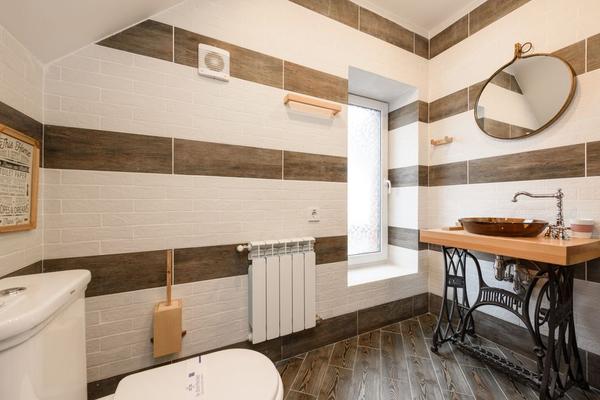
Wood-effect porcelain makes a bathroom feel warmer without putting timber in the splash zone. Mid-tone oak patterns pair well with off-white walls and brushed nickel. Follow the manufacturer’s recommended stagger, since long tile planks can have slight curvature that makes uneven edges noticeable.
Pattern as a focal point
Geometric or encaustic-inspired patterns work beautifully when the walls are restrained. Keep the print on the main floor and use a complementary plain tile elsewhere. For a walk-in shower, a smaller wet-area-rated mosaic in a matching colour may be more practical than extending a large patterned tile everywhere.
Small mosaics around a shower drain
Small tiles can accommodate the changing slopes around a conventional central drain more easily than large rigid formats. Extra grout joints contribute texture, but do not guarantee slip resistance. Mosaics also mean more grout to scrub, so choose them with maintenance in mind.
Texture matters more than showroom shine
Polished finishes reflect light dramatically, yet may not suit regularly wet floors. Matte is not automatically safe either: two equally matte samples can have different tested grip. Check the manufacturer’s documentation for the exact product, including whether it is intended for wet barefoot areas.
There is also a cleaning trade-off. Strongly textured surfaces can collect soap film in their recesses. A lightly structured finish may be easier to maintain, provided its wet-use suitability is confirmed. Take samples home to see whether water spots show and how easily dried residue wipes away. A home test cannot replace formal slip testing.
Work out tile size before ordering
Large-format tiles can make a small bathroom feel calm because there are fewer grout lines. However, they need a sufficiently flat base and careful setting. A shower with a central drain usually has slopes in several directions, making large rigid tiles difficult to fit. Drain design and the installer’s approved system should guide your options.
Dry-lay several pieces on the floor or sketch them to scale. Check the cuts at the doorway, toilet and bath. A balanced arrangement with sensible edge pieces often looks better than following a fashionable layout that creates slivers along every wall.
Grout, waterproofing and easy cleaning
Matching grout creates a quiet surface; contrasting grout makes a geometric layout more prominent. Pure white lines may show discolouration quickly, while mid-tone grout can be forgiving. Think about how the room will be cleaned, not just how the grout looks on installation day. A guide to choosing grout colours is useful when comparing samples.
Porcelain is defined by very low water absorption, generally 0.5 percent or less under relevant testing. That helps make it suitable for many bathrooms, but tiles and grout do not themselves waterproof a shower. Correct membranes, drainage, movement joints and installation details matter beneath the visible surface. Have a qualified installer specify the appropriate assembly.
Check whether your grout needs sealing and which cleaners suit both tile and grout. Frequent gentle cleaning is generally preferable to relying on harsh products to remove built-up soap residue.
A practical way to narrow the options
Imagine a compact family bathroom where a child splashes beside the bath and two adults use the room each morning. A warm, lightly textured porcelain floor with a quiet speckle will often be more forgiving than glossy white tiles or a deeply ridged finish. A separate shower mosaic may solve the drainage problem without changing the overall palette.
Bring two or three samples home. View them beside the vanity in daylight and evening light, then see how easily dried water or soap residue cleans off. Before buying, confirm the tile’s wet-use rating, suitability for the location, availability of matching trims and how much spare material to keep. Bathroom lighting ideas and small bathroom layout ideas can help coordinate the scheme.
Frequently asked questions
What type of tile is best for a bathroom floor?
Porcelain is a popular all-round option because of its durability and low water absorption. The best individual product is one approved for the expected wet conditions and easy enough for you to maintain.
Are matte bathroom tiles always non-slip?
No. A matte appearance does not guarantee wet grip. Compare tested information and manufacturer recommendations rather than judging safety from appearance alone.
Can I use the same floor tile inside the shower?
Only if the exact tile is suitable for shower-floor use and compatible with the drainage slope and installation system. Smaller complementary mosaics are often easier around central drains.
Are light or dark tiles easier to clean?
Both can show different marks: dark surfaces often reveal pale water spots, while very light floors may highlight hair and dirt. Mid-tone colours and subtle patterns can reduce how noticeable daily mess looks.
Choose for daily life, not just the photograph
The strongest bathroom floor is one you enjoy looking at and can live with comfortably. Select the pattern and colour you love, then verify wet-area suitability, surface texture, grout and waterproofing before committing. Practicality is part of the design, not a compromise added afterwards.