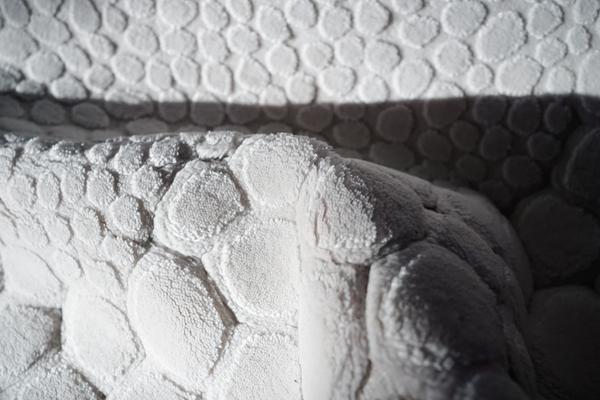
Layered texture interior design is less about filling a room with decorative objects and more about making the surfaces already there feel richer. A space can be almost entirely neutral and feel warm and complete when smooth, woven, soft and natural finishes are balanced. Texture is useful where hard flooring or restrained palettes leave rooms feeling flat.
The key is to build it in layers. Start with the largest surfaces, introduce one or two tactile furniture pieces, then finish with smaller materials that create contrast. Linen, boucle, wool, timber, rattan, ceramic and brushed metal can all work together when each has a clear role.
How to Layer Texture Without Making a Room Feel Busy
A well-textured room usually contains contrast at several scales. Walls and floors create the background, upholstery provides the middle layer, and cushions, throws, lampshades and accessories supply detail. If every surface is equally rough or highly patterned, the room can feel visually noisy. If everything is sleek, it can feel unfinished.
Think in pairs: soft against hard, matte beside subtle sheen, tightly woven next to loose weave, or refined furniture beside something handmade. This keeps textured home decor intentional even when the colour palette is restrained.
Living Room: Build Texture Around the Seating Area
The living room is an easy place to experiment because seating, rugs and curtains naturally create layers. A smooth woven sofa can be paired with a boucle armchair, while a deeply textured sofa often looks better with simpler surrounding pieces. Boucle furniture is most effective when treated as a focal texture rather than repeated everywhere.
Connect the seating with a wool, flatweave or low-pile textured rug. In a smaller room, choose one large enough for at least the front legs of the main seating to rest on it. Rattan interior ideas do not require a full bohemian scheme; a woven lampshade, cane-front cabinet or rattan side table can be enough.
A practical living-room fix
Imagine a grey living room that feels cold despite having attractive furniture. Instead of repainting, add full-length linen-look curtains, a cream boucle accent chair, a wool-blend rug and one woven lampshade. The colour story barely changes, but the room gains depth because light falls differently across each surface.
Bedroom: Focus on Softness, Weight and Quiet Contrast
Bedrooms benefit from softer texture because comfort is part of the room’s purpose. Let the bed do most of the work. Layer cotton or linen bedding with a quilt, coverlet or folded throw in a visibly different finish. An upholstered headboard adds another tactile plane and can make a plain wall feel more complete.
Many bedrooms contain fitted wardrobes, laminate flooring or smooth painted furniture. Soften these finishes with curtains that show a visible weave, a fabric lampshade, a bedside rug and a timber or cane accessory. Tactile home styling works best when it improves how the room feels physically as well as visually. A natural related topic here is Scandinavian bedroom styling, where restrained colour and material contrast work closely together.
Dining Room: Mix Durable Surfaces With Softer Details
A solid timber dining table already provides grain and variation. Contrast it with smoother chairs or upholstered seats. If the table is painted or sleek, woven chairs or a textured runner can supply warmth. A ribbed glass, linen or woven pendant adds another layer without taking up floor space.
Kitchen: Add Texture in Cleanable Doses
Kitchens contain plenty of hard finishes, including worktops, cabinetry, metal and glass. Add texture where it will not interfere with cleaning. Timber chopping boards, ribbed glass cabinet doors, handmade-look tiles, woven blinds and ceramic storage pieces can soften a highly practical space.
In white or grey kitchens, a few timber elements and a woven blind can provide more warmth than several decorative objects. In an open-plan home, repeat one material from the kitchen in the dining or living area to create flow without matching everything exactly.
Bathroom: Let Tile and Textiles Do the Work
Bathrooms need moisture-resistant finishes, but they do not have to feel slick. Fluted tiles, matte stone-effect surfaces, timber-look vanity units and ribbed glass all introduce dimension, while towels and bath mats provide softness.
Keep texture controlled in a small bathroom. One detailed surface, such as vertically ribbed tiles behind the basin, can be enough. Pair it with larger plain tiles elsewhere so the feature feels deliberate rather than crowded. A guide to natural materials in interior design would be a useful companion topic for choosing finishes across the home.
Hallway and Home Office: Add Character Without Clutter
A hallway runner, woven basket, timber console or textured lampshade can add character without narrowing the route. In a home office, a fabric chair, wool rug, cork pinboard or linen blind can balance the hard surfaces of desks, monitors and storage. In small rooms, depth does not require more objects, only surfaces that react differently to touch and light. A guide to decorating small rooms is another natural next read.
A Simple Texture Formula for Any Room
When you are unsure where to begin, use three levels. Choose a base texture such as timber flooring, a wool rug or linen curtains. Add a focal texture through one larger piece such as an armchair, headboard or woven cabinet. Finish with a contrasting detail through ceramics, lighting or a throw.
Then remove unnecessary repetition. Three woven baskets beside a rattan chair and cane cabinet may be too much; one basket may be enough. Texture feels sophisticated when materials have breathing room.
Frequently Asked Questions
What is layered texture interior design?
It is the practice of combining materials with different tactile and visual qualities so a room gains depth without relying heavily on colour or pattern. Common pairings include linen with timber, wool with smooth ceramics, or boucle with metal and glass.
Can you mix boucle and rattan in the same room?
Yes. Boucle is soft and dense, while rattan is open and structured, so the contrast works well. Keep the surrounding palette and accessories relatively simple so both materials have space to stand out.
How many textures should a room have?
There is no fixed number. A better rule is to create clear contrast across large, medium and small surfaces. If several materials look or feel almost identical, adding more will not necessarily create greater depth.
How do you add texture to a neutral room?
Start with fabric and natural materials rather than extra colour. Linen curtains, a wool rug, a boucle chair, timber furniture and one woven accessory can make a beige, cream, grey or white room feel warmer while keeping the palette calm.
Make Texture Part of the Room
The most convincing textured interiors do not look as though texture was added at the end. It is built into the room through upholstery, flooring, curtains, furniture and lighting. By balancing soft and hard, smooth and woven, matte and gently reflective surfaces, each room gains depth while staying practical and coherent.
Start with one contrast that is currently missing. A flat living room may need softness, a heavily upholstered bedroom may need timber or cane, and a sleek kitchen may need natural grain. Once those contrasts are in place, the room often needs fewer accessories, not more.